Design for cultural institutions and exhibitions
An exhibition or a production lives in a tangible space, in front of real people, often for a few weeks. I design exhibitions, installations, visual identities and printed material for museums, galleries, science centres, theatres and festivals, bringing an artist's eye to the space and a designer's clarity to everything printed and published around it.
I'm Himanshi Parmar, a visual artist and brand designer in Berlin. My work has been shown or used at the University of Manchester, the Whitworth, Science Gallery Bengaluru, Kampnagel Hamburg, the Ruhrfestspiele and Oerol Festival.
What curators and producers need from design
Cultural work is judged in the room. The design has to carry the ideas while people walk, sit, read and talk.
Space, flow and signage. Visitors read on their feet, from a distance and in passing. Layout, wall texts, labels and signage need to guide them through the space without competing with the work.
An identity that travels. A production or exhibition may move between venues, cities and languages. The visual identity has to hold together on a festival poster, a programme, a website and a different stage each time.
Room for the audience. The best exhibitions leave space for each visitor to make their own sense of the work. Design that explains everything takes that away.
Fixed openings, real budgets. Install dates don't move and budgets are tight. Materials, print runs and production have to be planned for both, ideally with as little waste as possible.
Artists, researchers and curators in one conversation. Exhibitions often bring several voices together. The design has to respect each of them and still feel like one show.
How I can help
- Exhibition design, layout, wall texts and signage
- Installations and artworks for group shows
- Visual identities for exhibitions, productions, festivals and cultural platforms
- Posters, programmes, menus and printed matter
- Websites, social media and digital campaigns for shows and seasons
- Set design and art direction
- Workshops and participatory formats for visitors
More on each of these on the Services page.
How we work together
Good design is a by-product of good relationships. In cultural work, that means time with the people, the material and the space.
- Start with the idea. Conversations with the artists, curators and researchers, and time with the material before anything is drawn.
- Walk the space. Plans, photographs or a visit, so the design follows how people will move, stop and read.
- Make by hand and on screen. Clay, thread, natural dye, photography and the screen, until the work finds its form.
- Plan for the install. Materials, print and production planned around the opening date and the budget, with as little waste as possible.
Selected work
Lacuna Kitchen, Afra Tafri
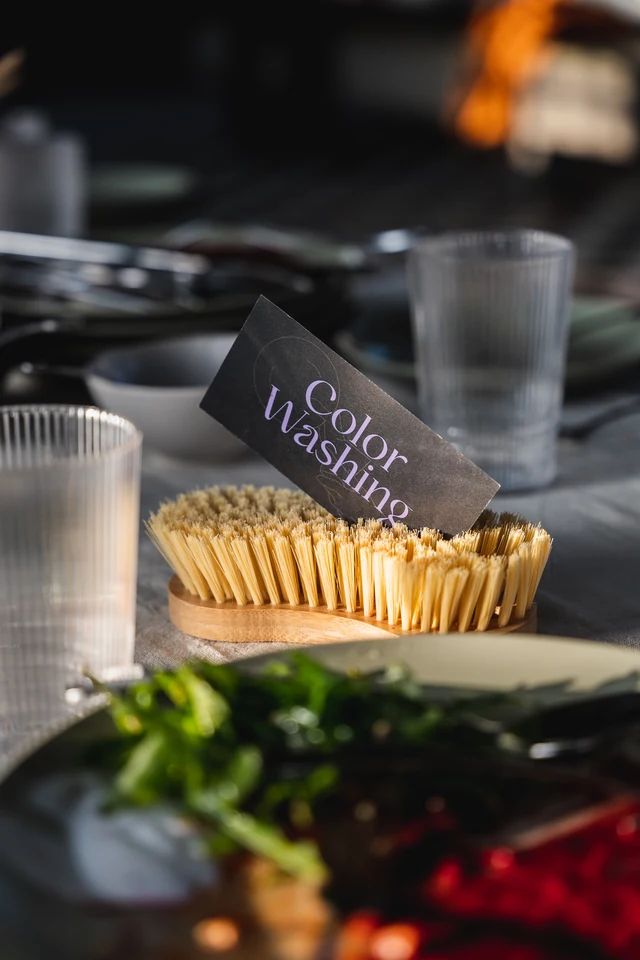
An immersive theatre pop-up restaurant by Abhishek Thapar, where the kitchen workers take the lead role. It has been performed at Kampnagel Hamburg and the Ruhrfestspiele (2023), and at Oude Kraan Arnhem, Oerol Festival and Grand Theatre Groningen (2025). As visual designer, I shaped the identity that travels with it across print, social media, the website and stories, and helped set the tone for the set design.
Colours in the Field, University of Manchester
An exhibition grown from Dr Arianna Tozzi's research on cotton in Vidarbha, India, made with SOPPECOM and MAKAAM. Textiles screen-printed with plant dyes grown by women in the research area are left unfixed, so they keep fading and changing as the exhibition travels. It runs with Creative Manchester from 3 to 30 November 2026, with a natural-pigment workshop at the Whitworth.
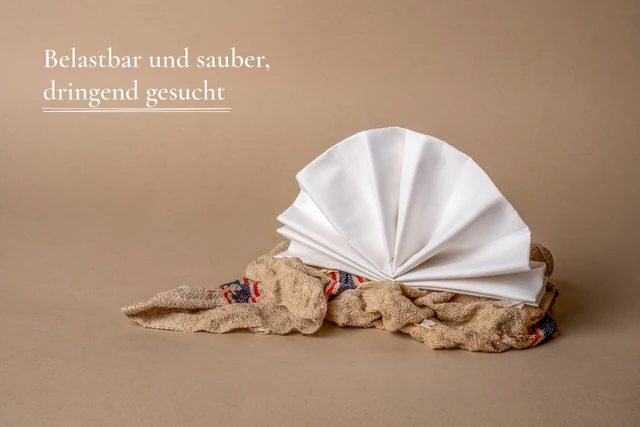
Belastbar und sauber, dringend gesucht, Kampnagel
An audio-visual installation by Abhishek Thapar on migrants working in so-called “unskilled” kitchen jobs. Visitors sit at a table and order stories from a menu. I created the identity, the menu and the illustrations, drawn on kitchen towels and toilet paper, and art-directed the poster photoshoot.
(Understanding) Mangrove Carbon, Science Gallery Bengaluru
Digital artworks for a mixed-media group installation in the CARBON exhibition, built on Technology for Wildlife Foundation's drone maps of a mangrove estuary.
Interim, Srishti Institute of Design
As visiting faculty and resident artist, I guided third-year design students from concept to installation of an ecological art exhibition, on a limited time and budget. Every piece was made from recyclable or natural materials, so the show left no waste behind.



Questions curators and producers ask
Can you design an identity that works across different venues?
Yes. Lacuna Kitchen's identity has travelled from Kampnagel and the Ruhrfestspiele to Arnhem, Oerol Festival and Groningen.
Do you work as an artist as well as a designer?
Yes. I make artworks for group shows, such as Mangrove Carbon at Science Gallery Bengaluru, and design the identities and spaces around exhibitions.
Can you work with researchers and scientists on an exhibition?
Yes. Colours in the Field and Mangrove Carbon both grew from research, with the researchers involved throughout.
Can you keep an exhibition low-waste?
It's something I plan for from the start. At Srishti, every piece was made from recyclable or natural materials.
Do you work with institutions outside Germany?
Yes. I'm based in Berlin and have worked with institutions in Germany, the Netherlands, the UK and India.
How long does a project take and what does it cost?
It depends on what we plan to make together, from a poster to a full exhibition. Send me a short note about your project and I'll come back with a timeline and a quotation.
Send me what you're working on
If you're planning an exhibition, a production or a season that needs a visual language as serious as its subject, I'd love to hear about it.