Services
Himanshi Parmar is a visual artist and brand designer in Berlin who has spent ten years working with NGOs, research institutes and cultural organisations on brand strategy, identity, illustration and exhibitions.
Most projects arrive as a question more than a finished brief: research that nobody outside the field can follow yet, a programme that needs a face people trust, a cause that needs immediate action.
Much of my work begins in my hands, with thread, clay or paint, and travels onto a screen. Somewhere between the two, the texture stays: a stitch, a print, a brushstroke that survives the pixels.
What I offer falls into three areas, and most projects draw on more than one.
Strategy
Before anything gets designed, we work out what needs to be said, to whom, and why it matters to them. This becomes the blueprint in words (what we are going to say) and it lays the foundation for the design that goes on top of it (how we say it). To build it, we look closely at your values, vision and mission, the problems you're working on, your audiences and competitors, and the emotions you want people to feel.
This is usually for organisations at a turning point: a new name, a new programme, a research lab that needs to be understood beyond its field, or a team that has outgrown its current identity.
What this covers: brand strategy, brand architecture, creative direction, naming, target audience, consultancy, facilitating workshops.
For example
Scaling Trust
For a lab researching how trust and technology are connected, I worked as creative director and led a small team to build a visual world that could carry the lab's mission beyond academic audiences. Trust is abstract, so the strategy work started by finding what it could look like without oversimplifying the research. That became the identity's central idea of scaling and sharing, and from it grew a cast of characters who make trust feel tangible and human, carried through the website, illustrations, animations, podcast and social media.

Design
This is where the thinking becomes something people can hold, read and remember: an identity, a publication, a website, a set of illustrations that explain what words alone can't. For researchers and scientists, that often means turning dense findings into reports, infographics and illustrated stories that people outside the field can follow.
What this covers: brand identity, art direction, illustration, editorial design, print, packaging, UI / UX / web, data visualisation, semester courses and university programmes.
For example
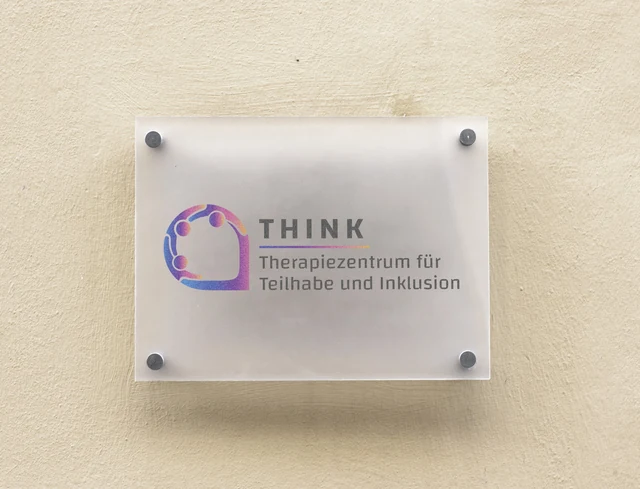
THINK
The brand identity for a therapy centre for autistic children at Klinikum Itzehoe, built without the puzzle piece many autistic people reject.
Climate Transition Economics
The logo, identity and website for a practice that works between academic research and climate policy.
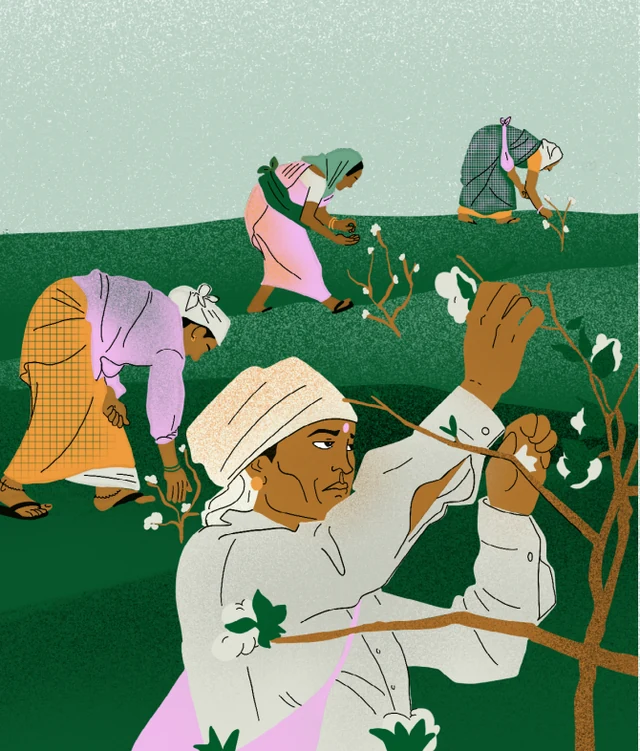
Ploughing through Injustice
Graphic stories for SOPPECOM, based on conversations with more than fifty women farmers about gendered violence in agriculture.
Amnesty International
Illustrated narratives for the “Bulldozer Injustice” campaign.

Art
Sometimes impact lands best at a slant, instead of on the nose. An artwork leaves room for people to reach an idea on their own terms, and it gives people who see the world very differently a place to meet in the middle.
I create artworks, exhibitions and installations, often with scientists and theatre makers, and teach through hands-on workshops.
What this covers: exhibition design, installations, curation, set design, workshops.
For example
Understanding Mangrove Carbon
Artwork for Science Gallery Bengaluru's CARBON exhibition, interpreting how mangroves store carbon.
Lacuna Kitchen
The visual world of an immersive theatre restaurant by Afra Tafri, performed at Kampnagel Hamburg, the Ruhrfestspiele and Oerol Festival.
Ecological Art Programme
A three-week intensive class for third-year design students on exhibition design through ecological art, with scientific feedback from our research partners.



Who I work with
Non-profits and social impact organisations, universities and research groups, climate and sustainability organisations, cultural and creative institutions, musicians, technology start-ups and mental health organisations, including Amnesty International, Erasmus University Rotterdam, the University of Amsterdam, Science Gallery Bengaluru and Klinikum Itzehoe. I'm based in Berlin and work with clients around the world.
How I work
Good design is a by-product of good relationships. I take on only a handful of projects at a time, so each one gets the attention it deserves, and each brings together a team from a network built over the past decade, matched to the work. Translating serious research and nonprofit work can get heavy, so I bring my funny bone to every project, and it helps if you bring yours.
FAQ
Do you work with organisations outside Germany?
Yes. I'm based in Berlin and work with clients globally, including in India, the Netherlands, New Zealand and the US.
Can you work from research or a brief that's still evolving?
Yes, much of my work starts there. Send me the research, the report or the problem, and we'll find the visual form together.
Do you work alone or with a team?
Both. Smaller projects I design myself; larger ones bring in collaborators from my network, chosen for the work.
How long does a project take, and what does it cost?
It really depends on what we plan to work on together, from a single report to a full brand identity. Get in touch with a short note about your project, and I'll send you a timeline and a quotation.
Tell me what you're working on.
Send me the brief, the research or just the problem, and I'll find the best way forward.