Design for NGOs and human-rights campaigns
NGOs need design that a funder can trust, a community can recognise itself in and a small team can keep using long after the designer has gone. I design identities, illustrated campaigns, reports and design systems for nonprofits and human-rights organisations, turning field research and testimony into visuals people understand and share.
I'm Himanshi Parmar, a visual artist and brand designer in Berlin. I've worked with Amnesty International, SOPPECOM, Quest Alliance (with Ooloi Labs), Tech for Wildlife Foundation, Prayas Energy Group, Puranik Foundation, Agamishaala and Scaling Trust.
What NGOs need from design
Some of the most meaningful work happens quietly, on the ground. NGO and human-rights teams carry so much of their heart and head in the field that it is hard to step back and see their own work from the outside. Design gives that work a space to be shared and helps amplify the voices at its centre.
Most nonprofit design problems come back to trust: with funders, with the communities you work alongside and with the public you need to move.
Meeting a funder's credibility bar. Programme officers read hundreds of proposals, annual reports and impact summaries. Yours need to look as rigorous as your work: consistent, clear about outcomes and free of anything that reads as spin.
Telling people's stories with dignity. Campaigns often carry testimony from people at real risk. Illustration can tell a true story without photographing the person or the place, and it can show strength alongside struggle.
Making field research shareable. Interviews, surveys and policy findings have to become something a supporter grasps in a few seconds and passes on, with the facts still intact underneath.
Many hands, one voice. Programme teams, partners, country offices and volunteers all produce material. A design system with clear templates keeps them consistent without a designer signing off every post.
Design that lasts beyond one grant. Funding comes in cycles and budgets are tight. Tools your team can reuse for years are worth more than a one-off campaign look.
How I can help
- Brand identities and design systems for nonprofits, programmes and coalitions
- Illustrated campaigns and graphic narratives for social media and print
- Annual reports, policy briefs, impact summaries and publications
- Curricula, learning materials and educational games
- Websites and digital collaterals
- Workshops to shape your story and audience before any design starts
More on each of these on the Services page.
How we work together
Good design is a by-product of good relationships, so the work starts with listening.
- Listen first. A conversation with your programme and communications teams, then time with your research, reports and the voices behind them.
- Shape the story. We agree who the work has to convince (funders, policymakers, supporters or communities) and what each of them needs to see.
- Sketch early, share openly. The people closest to the work see drafts early and help shape them.
- Build to last. Templates and guidelines your team can keep using without me.
Selected work
Amnesty International: Bulldozer Injustice
For Amnesty International's “Bulldozer Injustice” campaign, I turned research interviews with people whose homes and properties had been demolished in India into a series of illustrated panels for Amnesty's social channels. The brief was to make their testimony easy to grasp and share.
SOPPECOM: Ploughing through Injustice
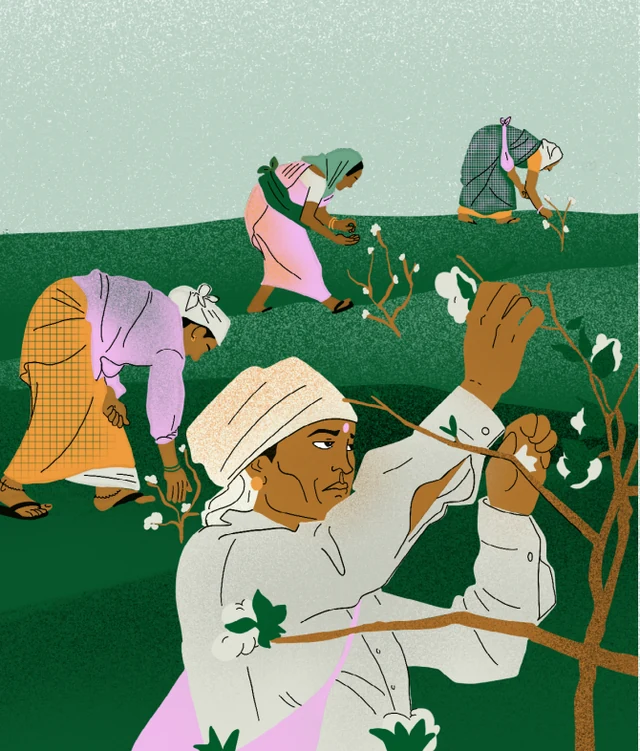
With SOPPECOM, I illustrated and designed ten graphic stories from a study on structural violence against rural women in agrarian distress, based on conversations with more than fifty women farmers in Maharashtra, Telangana and Punjab. Each story has its own colour palette, holding the women's harsh realities alongside their resilience.
Quest Alliance: The Anandshala Programme
Quest Alliance ran the Anandshala Programme in Samastipur, Bihar, as part of a USAID-funded pilot to reduce school dropout. With Ooloi Labs, I directed the visual style and built a design system the team could keep using on its own, long after our involvement.
Quest Alliance: STEM for Girls and Career Quest
For Quest Alliance's STEM for Girls curriculum, I directed the characters and visuals that help young learners approach gender, stereotypes and careers and see themselves in the stories. The work carried on into Career Quest, a game made with IBM for students in government secondary schools.
Agamishaala
A reflective journal for the Agamishaala 2023 cohort of changemakers working on data and technology, children's rights, community media and research. The design plays within a structure: a clear framework with room for each person's own path.



Questions NGOs ask
Do you work with small NGOs as well as large ones?
Yes. I've worked with international organisations such as Amnesty International and with small research and grassroots teams such as SOPPECOM. The approach fits the budget and the people who will use the work.
Can you work within our existing brand guidelines?
Yes. Many campaigns sit inside an existing identity. I design within your guidelines and suggest additions only where the campaign needs more room.
Can illustration protect the people in our stories?
It can. Illustration tells a true story without photographing the person or the place, which matters when people are at risk.
Do you design annual reports and funder reports?
Yes, along with policy briefs, impact summaries and printed publications.
Do you work with NGOs outside Germany?
Yes. I'm based in Berlin and much of my nonprofit work so far has been with organisations in India.
Should we hire a freelance designer or an agency?
Hire an agency if you need a large team producing a high volume of work at once, such as a campaign running in many countries and channels. Hire an independent designer if you want the person you meet to be the person doing the work, with direct conversations and lower overheads. I work independently and bring in a team from my network when a project needs more hands.
How do I brief a designer?
Tell them what your organisation does, who the work needs to reach and the one thing those people should remember. Add your deadline, your budget and any existing guidelines, research or reports. A rough brief is fine, because we'll sharpen it together in the first call.
How long does a project take and what does it cost?
It depends on what we plan to make together, from a single campaign to a full identity. Send me a short note about your project and I'll come back with a timeline and a quotation.
Send me what you're working on
If you're working on a campaign, a report or a cause that needs to reach people beyond your field, I'd love to hear about it.