Illustration and graphic narratives
Illustration and graphic narratives turn research, testimony and abstract ideas into pictures and stories people can grasp in a few seconds and carry with them. It's for NGOs, human-rights campaigns, research teams and publications with something important to say that words alone struggle to carry. You get a series of illustrations, graphic stories or infographics in a visual language made for your subject, ready for social media, print or the web. I start by listening to the research and the people behind it, and much of the work begins by hand, in paint, thread or ink, before it reaches the screen.
I'm Himanshi Parmar, a visual artist and brand designer in Berlin. I've illustrated for Amnesty International, SOPPECOM, D91 Labs, Scaling Trust, Quest Alliance and Science Gallery Bengaluru.
What's included
Most projects draw on a few of these.
Graphic narratives. Illustrated stories built from interviews, research and lived experience, for campaigns, reports and social media.
Editorial illustration. Illustrations for articles, blogs, reports and book covers that give each piece a warm, recognisable voice.
Characters. A cast of characters that lets people see themselves in the story, from learning materials to a lab's whole visual world.
Infographics and data visualisation. Dense research and data drawn so anyone can follow it, without losing the facts underneath.
Artworks. Illustrations and paintings for exhibitions and installations, made with researchers and their material.
How we work together
Good design is a by-product of good relationships, so clients are treated as teammates from the first conversation.
- Research mode first. I read the interviews, reports and data, and ask the questions an outsider would.
- Find the story. We agree on what each picture has to say and who it is for, and what can be left out.
- Sketch by hand. Early sketches go to the people closest to the work, so the drawings stay true to the facts and to the people in them.
- Build a visual language. Colour, texture and style chosen for the subject, so a whole series feels like one voice.
- Deliver for every format. Files ready for social media, print and the web.
The process works best when it's collaborative, playful, yet structured.
Selected work
Amnesty International: Bulldozer Injustice
For Amnesty International's “Bulldozer Injustice” campaign on the unlawful demolition of Muslim-owned homes and properties in India, I turned research interviews with the people affected into a series of illustrated panels for Amnesty's social channels, made to be easily grasped and shared.
SOPPECOM: Ploughing through Injustice
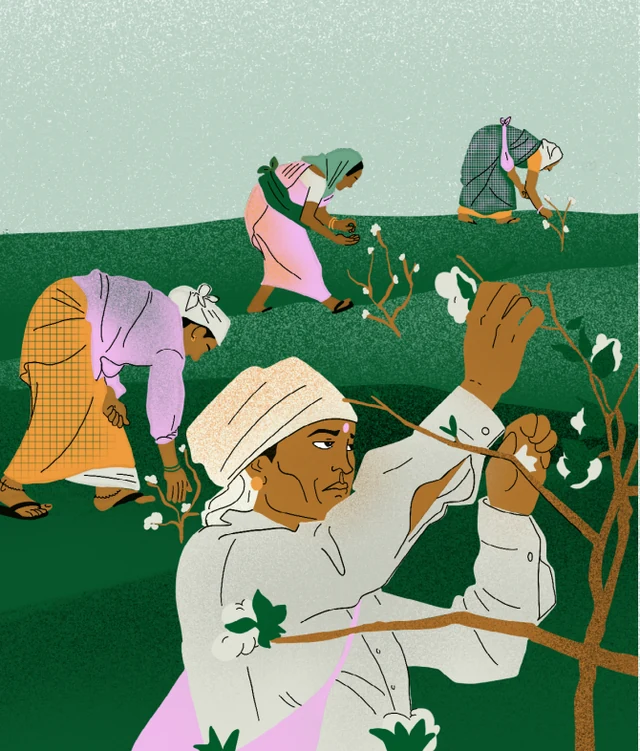
Ten graphic stories from conversations with more than fifty women farmers in Maharashtra, Telangana and Punjab, part of a study on structural violence in agrarian distress. The dark, rough-textured reality of their lives sits beside a unique colour palette for each story, highlighting every woman's resilience in her own way.
Scaling Trust
As creative director, I led a small team to build a visual world for a lab researching how trust and technology connect. From the identity's central idea of scaling and sharing grew a cast of characters who make an abstract subject feel tangible and human, carried through the website, animations, podcast and social media.


Questions about illustration
Can illustration protect the people in our stories?
It can. Illustration tells a true story without photographing the person or the place, which matters when people are at risk.
How do you keep illustrations accurate to the research?
Sketches go back to the researchers early and often, so nothing drifts from the evidence.
Can you create a set of characters for our programme?
Yes. For Quest Alliance's STEM for Girls curriculum and for Scaling Trust, characters helped people see themselves in the story.
Do you draw by hand or digitally?
Both. Much of my work begins by hand, in paint, thread, ink or clay, and moves onto the screen, so the texture stays.
How long does a project take and what does it cost?
It depends on what we plan to make together, from a single illustration to a full series. Send me a short note about your project and I'll come back with a timeline and a quotation.
Send me the story you want to tell
Let's build work that runs deeper than the surface, and make it look damn good while we're at it.