Design for research and science communication
Research only changes things once the right people understand it. I design reports, illustrations, data visualisations, exhibitions and identities for researchers, labs and universities, turning dense findings into work that funders, policymakers and the public can follow, without losing the precision underneath.
I'm Himanshi Parmar, a visual artist and brand designer in Berlin. I've worked with the University of Manchester, the University of Amsterdam, Erasmus University Rotterdam, the University of Chicago, Science Gallery Bengaluru, Technology for Wildlife Foundation, Scaling Trust and Climate Transition Economics.
What researchers need from design
Researchers spend years getting the detail right. The hard part is letting people outside the field see why it matters.
Dense material made legible. Papers, datasets and policy findings need a visual structure that tells a non-specialist where to look first, while every claim stays true to the research.
Accuracy over simplification. A designer who flattens the nuance costs you a round of corrections and some credibility with peers. The work has to be clear and still precise enough to survive a researcher's reading.
Several audiences at once. The same findings often have to reach peers, funders, policymakers and the public, each with different time, vocabulary and questions.
Impact and public engagement. Most research funders now expect communication beyond academic journals. Reports, exhibitions, websites and workshops are how a project shows that reach.
Deadlines set by the research calendar. Conferences, launches, grant reports and exhibition openings don't move, so the design process has to fit around them.
How I can help
- Research reports, policy briefs, summaries and publications
- Infographics, data visualisation and illustrated explainers
- Identities and websites for labs, research projects and institutes
- Exhibitions and installations that bring research into public space
- Posters, book covers and conference materials
- Art made with researchers, using art as a research method
- Workshops that turn findings into hands-on experiences
More on each of these on the Services page.
How we work together
Good design is a by-product of good relationships. With research, that starts with understanding the work well enough to draw it honestly.
- Research mode first. I read the papers, the data and the drafts, and ask the questions an outsider would.
- Find the one thing. Together we agree what each audience must walk away remembering, and what can stay in the footnotes.
- Sketch with the researchers. Drafts go to the people who know the subject best, early and often, so nothing drifts from the evidence.
- Move between materials. Clay, thread, natural dye, photography and the screen, until the work finds its form.
Selected work
Colours in the Field, University of Manchester
An exhibition grown from Dr Arianna Tozzi's research on cotton farming in Vidarbha, India, made with community partners SOPPECOM and MAKAAM. We used art as a research method: the textiles are screen-printed with plant dyes grown by women in the research area, layered with archival material and quotations. It runs with Creative Manchester at the University of Manchester from 3 to 30 November 2026, with a natural-pigment workshop at the Whitworth.
(Understanding) Mangrove Carbon, Science Gallery Bengaluru
For the CARBON exhibition, Science Gallery Bengaluru asked Technology for Wildlife Foundation and three artists to interpret blue carbon. I built digital artworks on the foundation's drone maps of a mangrove estuary, layering their scientific data with my illustrations for a mixed-media group installation.
Scaling Trust
Scaling Trust researches how trust and technology connect and wants its academic and policy work to reach people outside academia. As creative director, I led a small team on the identity, website, illustrations, animation, podcast and social media, making an abstract subject feel tangible without oversimplifying the research.
Climate Transition Economics
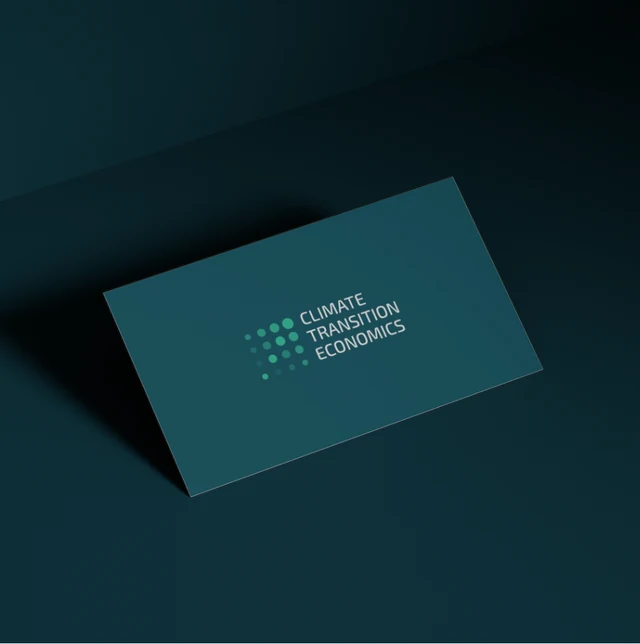
The practice of climate economist Dr Michael Jakob works between academic research and policy advice. Its identity and website had to feel credible to policymakers and academics and approachable to everyone else, with one quiet gesture: an upward arrow hidden in the logo.
SOPPECOM: Ploughing through Injustice
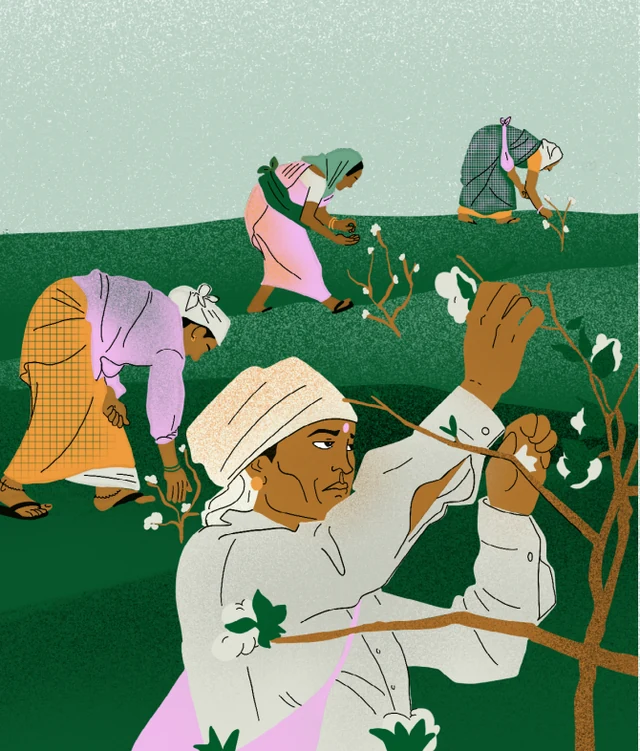
A study of structural violence against rural women in agrarian distress became ten illustrated stories, drawn from conversations with more than fifty women farmers in Maharashtra, Telangana and Punjab.
D91 Labs
D91 Labs, an open-source initiative by Setu, publishes user research on financial inclusion and the financial journeys of people across India. Brought in by NOCT, I worked on its rebranding, illustrations, blog visuals and infographics, turning dense research into visuals anyone could follow in close collaboration with the researchers.



Questions researchers ask
What should I send a designer before we start?
The question your research answers, the one finding your audience most needs to remember, who that audience is and a contact who can answer questions while the design is in progress.
Can you make dense research accessible without oversimplifying it?
Yes. That's most of my work. Drafts go back to the researchers early so the visuals stay true to the evidence.
Can design help with our project's dissemination or public engagement?
Yes. Reports, websites, exhibitions, workshops and social media can all carry findings beyond academic journals.
Do you work with universities and research projects outside Germany?
Yes. I'm based in Berlin and have worked with universities and research partners in the UK, the Netherlands, the US and India.
How long does a project take and what does it cost?
It depends on what we plan to make together, from a single poster to a full exhibition. Send me a short note about your project and I'll come back with a timeline and a quotation.
Send me the paper, the data or just the question
If you have research that needs to reach people beyond your field, I'd love to hear about it.